Aerodynamic efficiency
A 15-metre wingspan, a 1:24 glide ratio, and removable wing extensions (adaptable to 11 metres) minimize total drag and maximize electric range with flexible hangar options.


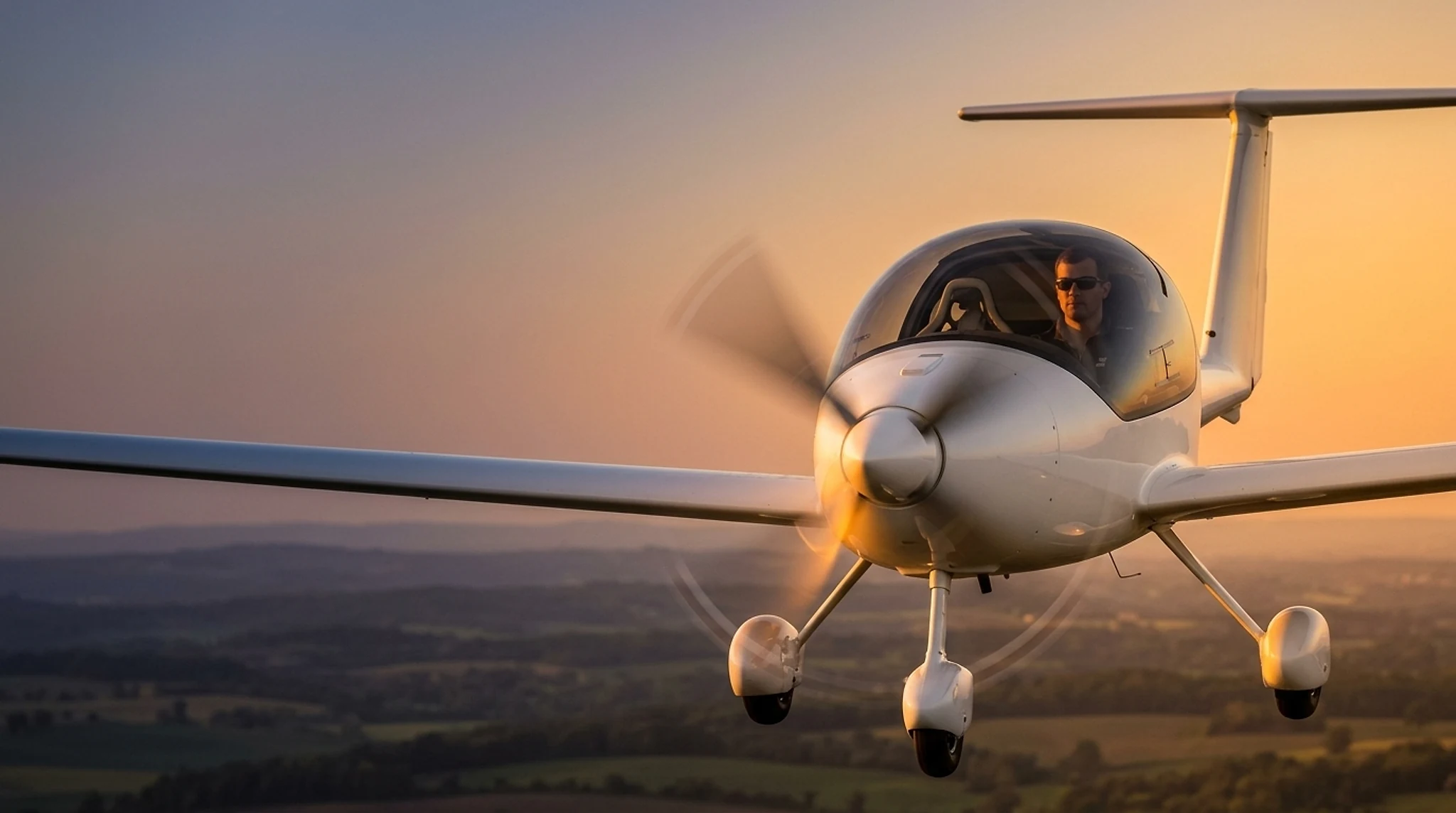
Electric rebellion takes flight
EULE is a two-seat electric ultralight motor glider based on the proven Altus airframe. The electric variant is planned to fly for the first time in early 2027.
2027 technical data
2
Seats
15m
Wingspan
> 200km
Range
120min + 30 min
Flight time + reserve
EULE stands for Electric Ultra Light aircraft by EMMA. The two-seat ultralight motor glider is based on the proven Altus airframe. It has flown with a combustion engine since 2018, accumulated more than 800 flight hours and is built in series. Instead of starting from zero, development can focus on the electric propulsion system and its integration. The current Rotax-powered Altus can already be flown and purchased.
 View the Altus aircraft

Airframe
A 15-metre wingspan, a 1:24 glide ratio, and removable wing extensions (adaptable to 11 metres) minimize total drag and maximize electric range with flexible hangar options.
Advanced composite construction, precise manufacturing tolerances, a reinforced cockpit safety cell, and the standard GRS ballistic rescue parachute system ensure reliable safety for demanding flight operations.
Two full side-by-side seats, factory-standard dual controls, and panoramic visibility ensure fatigue-free touring and first-class travel comfort for two.
Not a drawing-board prototype: the airframe is already built in series. Established supply chains ensure reproducible quality and dependable parts availability.
Altus is led by experienced aerospace and structural engineers with deep expertise in flight mechanics, lightweight design, and composite materials.
Engineered and refined from real-world flying experience: harmonious control response, forgiving stall characteristics with no spin tendency, and intuitive handling in the air.
The electric variant
The regulatory certification path is officially confirmed. Initial ground tests will take place later this year; the first flight of the electric EULE is planned for early 2027.
Sovereign safety through multi-level redundancy: The EULE powertrain architecture incorporates two motors, four motor controllers, and eight independent batteries. The electric motors, power electronics and batteries used are in active service and flight-proven across various civilian and military aircraft. EULE charges flexibly at standard Type 2 charging points (11/22 kW) and via adapter from 400V CEE three-phase sockets. The aerodynamic glider profile delivers a 1:24 glide ratio and is protected by the standard GRS ballistic rescue parachute system.
> 200 km
Range
120 min
Flight time
+ 30 min
Reserve
600 kg
MTOW
4 hours
EULE is designed for later battery upgrades. Depending on their development, they could make flight times of up to four hours possible.

A seat for company – or room for your personal day trip. Two full side-by-side seats give you the freedom to take off together or fly solo with light luggage on the passenger seat for regional destinations.
Electric propulsion reduces motor noise and vibration. Aerodynamic propeller noise remains.
At current fuel prices, EULE's operating costs are approximately 30% lower than comparable combustion aircraft – thanks to efficient electricity use and minimal engine maintenance.
A 1:24 glide ratio and standard GRS ballistic whole-aircraft rescue parachute system provide uncompromising safety.
Two full seats with dual controls – perfect for discerning private travel, shared journeys, and spontaneous getaways.
Motivation
As engineers, our task is to make technical possibilities useful. Humanity's dream of leaving the ground and flying should remain possible in the solar age. We see solar-electric aviation as a way to preserve that dream for private flight. We will not match every possibility of fossil technology from day one – we have to conquer the sky again.
Otto would do it now, too.

Behind EULE
ElektroMobilitäts MAnufactur GmbH combines battery technology, electric propulsion and system integration into one coordinated aviation system.
Eight independent batteries for a partitioned energy system with multi-level redundancy.
Two motors and four motor controllers for dependable propulsion and fault tolerance.
Building structure, balance, cooling and pilot controls as one coordinated aircraft.
FAQ
EULE is a two-seat electric ultralight motor glider with a 15-metre wingspan. The electric variant is based on the proven Altus airframe: it has flown with a combustion engine since 2018, logged more than 800 flight hours with the Rotax engine and is built in series. The electric EULE's first flight is planned for early 2027.
The electric EULE is designed for more than 200 km range and 120 minutes of flight time plus 30 minutes reserve. The current development stage specifies a maximum takeoff weight of 600 kg, a 15-metre wingspan (modularly reducible to 11 metres), and two side-by-side seats with a 1:24 glide ratio. The powertrain features multi-level redundancy with two motors, four motor controllers, and eight independent batteries. The electric motors, power electronics and batteries used are in active service and flight-proven across various civilian and military aircraft.
The regulatory certification path is officially confirmed. Initial ground tests will take place later this year; the first flight of the electric EULE is planned for early 2027.
Yes. EULE is designed as a two-seat ultralight motor glider with a maximum takeoff weight of 600 kg. The electric variant is developed and built by ElektroMobilitäts MAnufactur GmbH (EMMA) at Lüneburg Airfield (EDHG).
A standard Sport Pilot License (UL SPL for three-axis aerodynamically controlled ultralights) with a LAPL or Class 2 medical certificate is sufficient to fly the EULE. Thanks to the European harmonisation of the 600 kg ultralight category and target approval in Q2 2027, the EULE can be operated across European airspace without complicated cross-border hurdles.
At current fuel prices, EULE's operating costs are approximately 30% lower than those of comparable combustion-powered aircraft. In addition to lower energy costs per flight hour, complex maintenance procedures such as oil changes, spark plug replacements, and mechanical engine overhauls are eliminated.
Yes. Alongside direct ownership, we are evaluating an exclusive flight-hour subscription model. EULE aircraft can be stationed at selected airfields with sufficient subscriber density. Interested pilots can select this option directly on the waitlist registration form.
Sovereign safety through multi-level redundancy: The EULE propulsion architecture consists of two motors, four motor controllers, and eight independent batteries. Even in the event of a partial component or battery failure, sufficient power is always maintained for safe continued flight.
EULE charges flexibly at standard Type 2 charging points with 11 or 22 kW, as well as via adapter from standard 400V CEE three-phase industrial sockets at airfields or in hangars. Exact charging times will be announced during flight testing.
Safety is paramount: EULE features a 1:24 glide ratio, allowing it to glide up to 24 kilometres from an altitude of 1,000 metres to reach a safe airfield with the motor turned off. This is backed by a factory-standard GRS whole-aircraft ballistic rescue parachute system, a reinforced cockpit structure, and benign stall characteristics with no tendency to spin.
Yes. EULE features removable wing extensions that allow reducing the wingspan from 15 metres to 11 metres, simplifying maneuvering and hangar storage where space is tight. Furthermore, the airframe is compatible with a customised Cobra glider trailer for protected road transport.
Both seats feature factory-standard dual controls. This offers maximum comfort on shared journeys, effortless control handover on long cross-country legs, and straightforward checkout or refresher flights.
Conventional powered aircraft have significantly higher aerodynamic drag; existing electric aircraft on the market are thus mostly limited to short 45-to-50-minute traffic patterns. The EULE leverages the superior aerodynamics of a motor glider with a 15-metre wingspan and a 1:24 glide ratio. This enables true cross-country touring (> 200 km, 120 minutes flight time plus 30 minutes reserve) and fills the market gap for modern touring motor gliders – smooth, quiet, and with roughly 30% lower operating costs.
Secure prioritized access to the initial production series. Receive verified milestones from ground tests, flight testing insights, and priority for early production slots.