64kWp
Photovoltaics
Solar capacity on the hangar roof


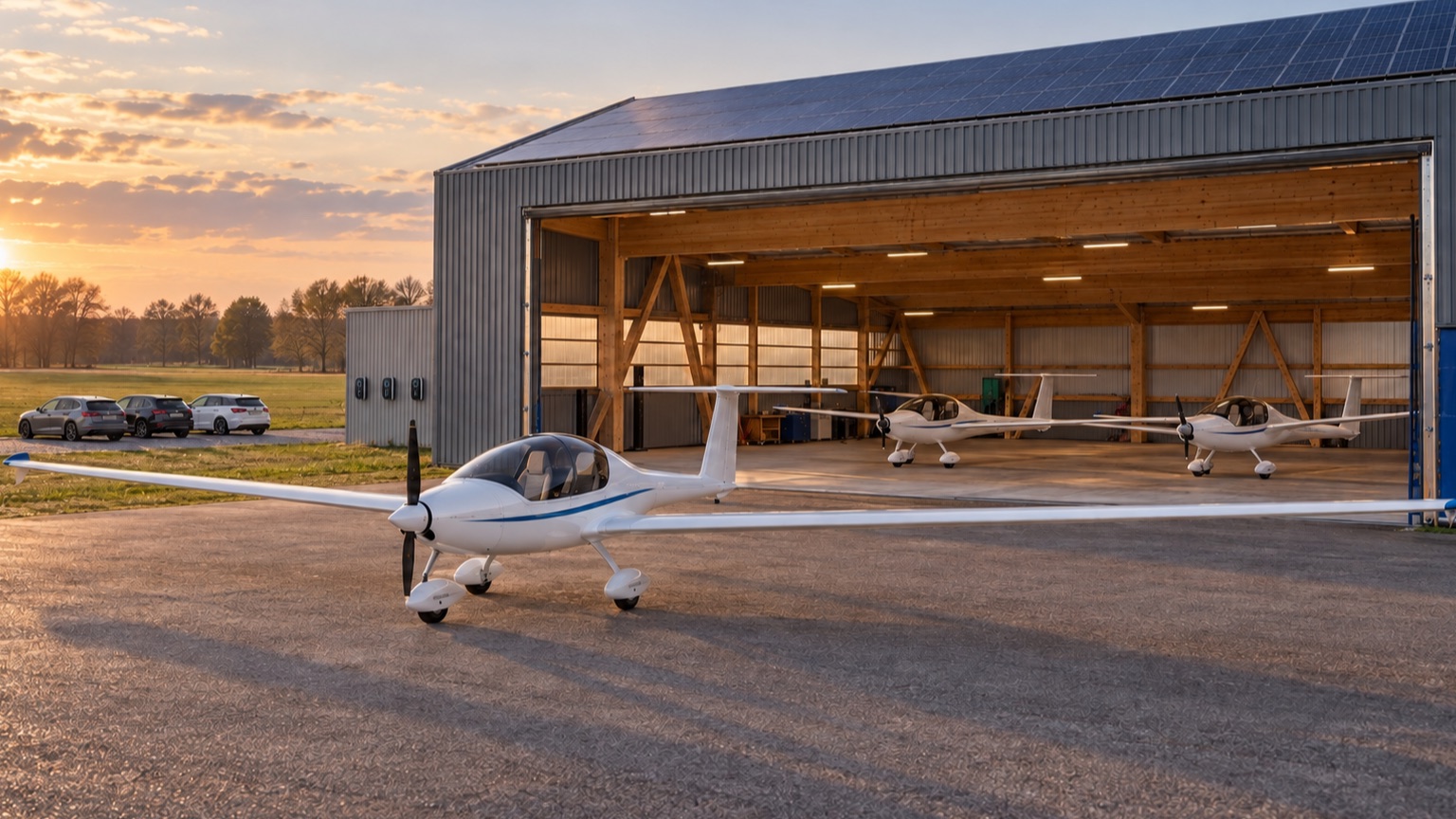
Solar hangar, storage and charging infrastructure as one coordinated concept for airfields, clubs and sharing locations.
Concept visualization
The solar hangar combines space for three motor gliders with local generation, energy storage and six charging points for the airside and landside.
64kWp
Solar capacity on the hangar roof
80kWh
Energy buffer for the site
3× 15 m
Hangar spaces at full wingspan
6× Type 2
For aircraft and cars
Up to 22 kW per charge point · maximum 60 kW total output
Energy is distributed where it is needed. Cars charge in the parking area and aircraft on the airside – from the same local system.
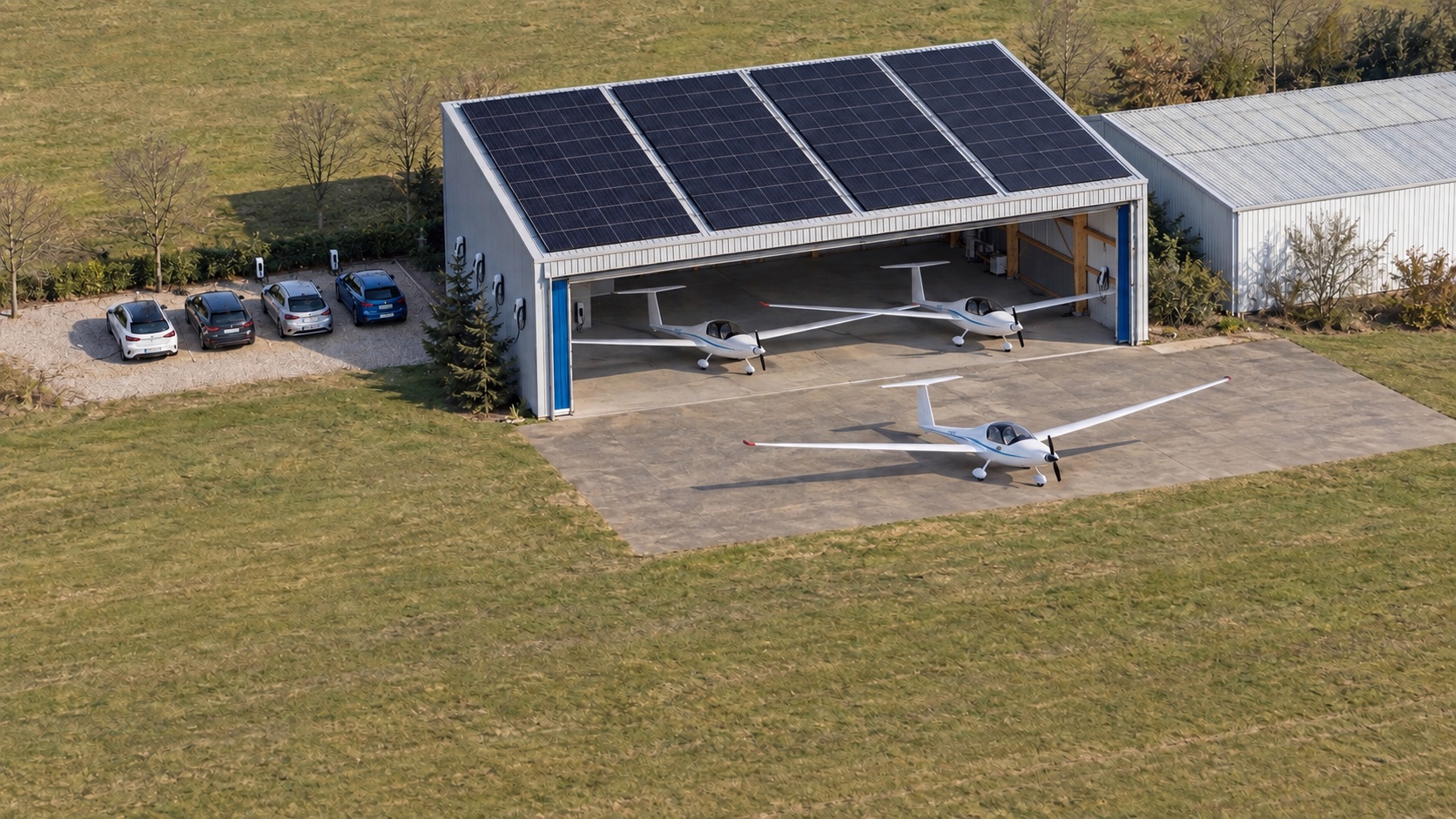
Four elements are planned as one system – supporting electric airfield operations without separate infrastructure islands.
64 kWp of photovoltaics produce energy directly at the hangar.
80 kWh of storage buffers generation and consumption at the site.
The system supplies six Type 2 charge points with a maximum combined output of 60 kW.
Aircraft and cars charge in their respective operating areas.
EDHG reference
At Lüneburg Airfield (EDHG), a completed project demonstrates how solar area, hangar and separated charging zones can work together: four charge points for cars and two for aircraft on the airfield.
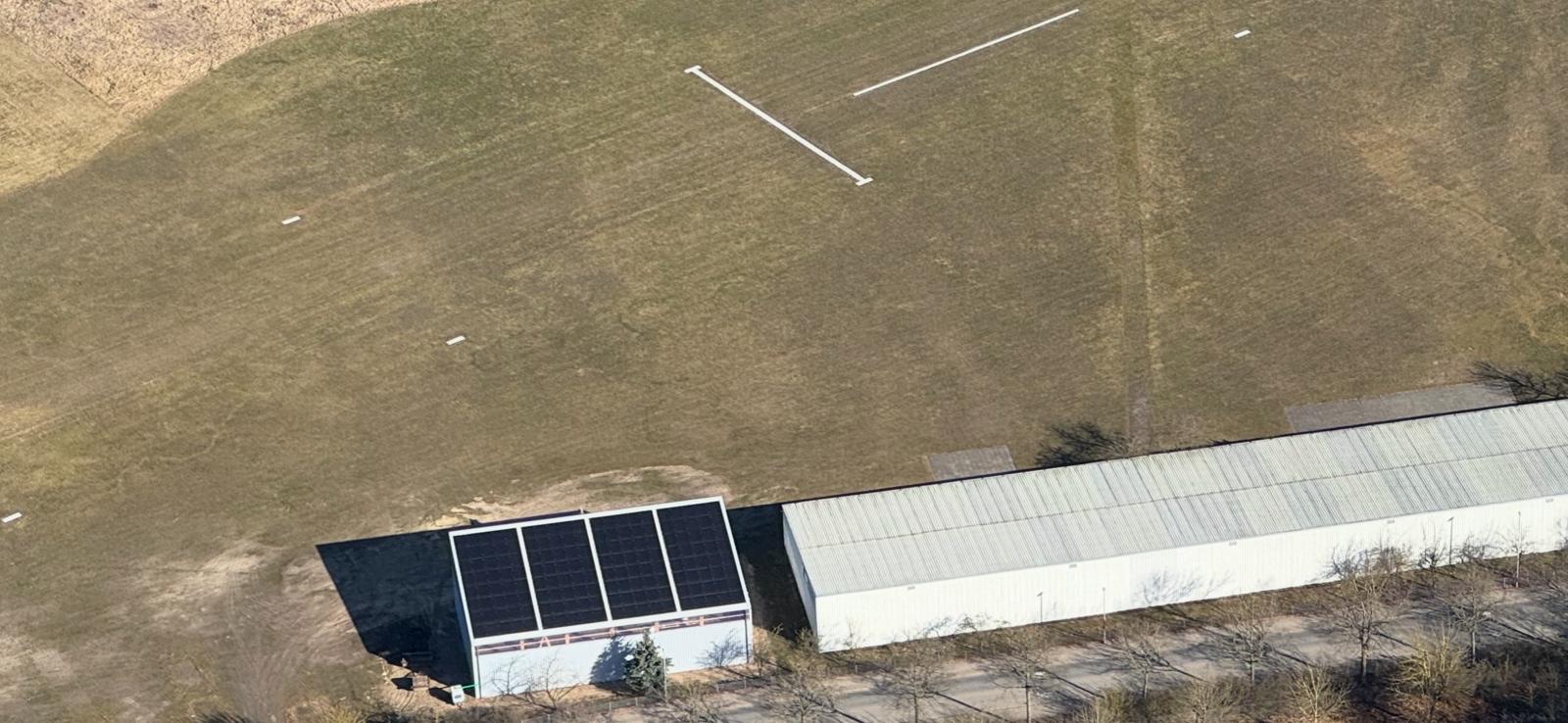
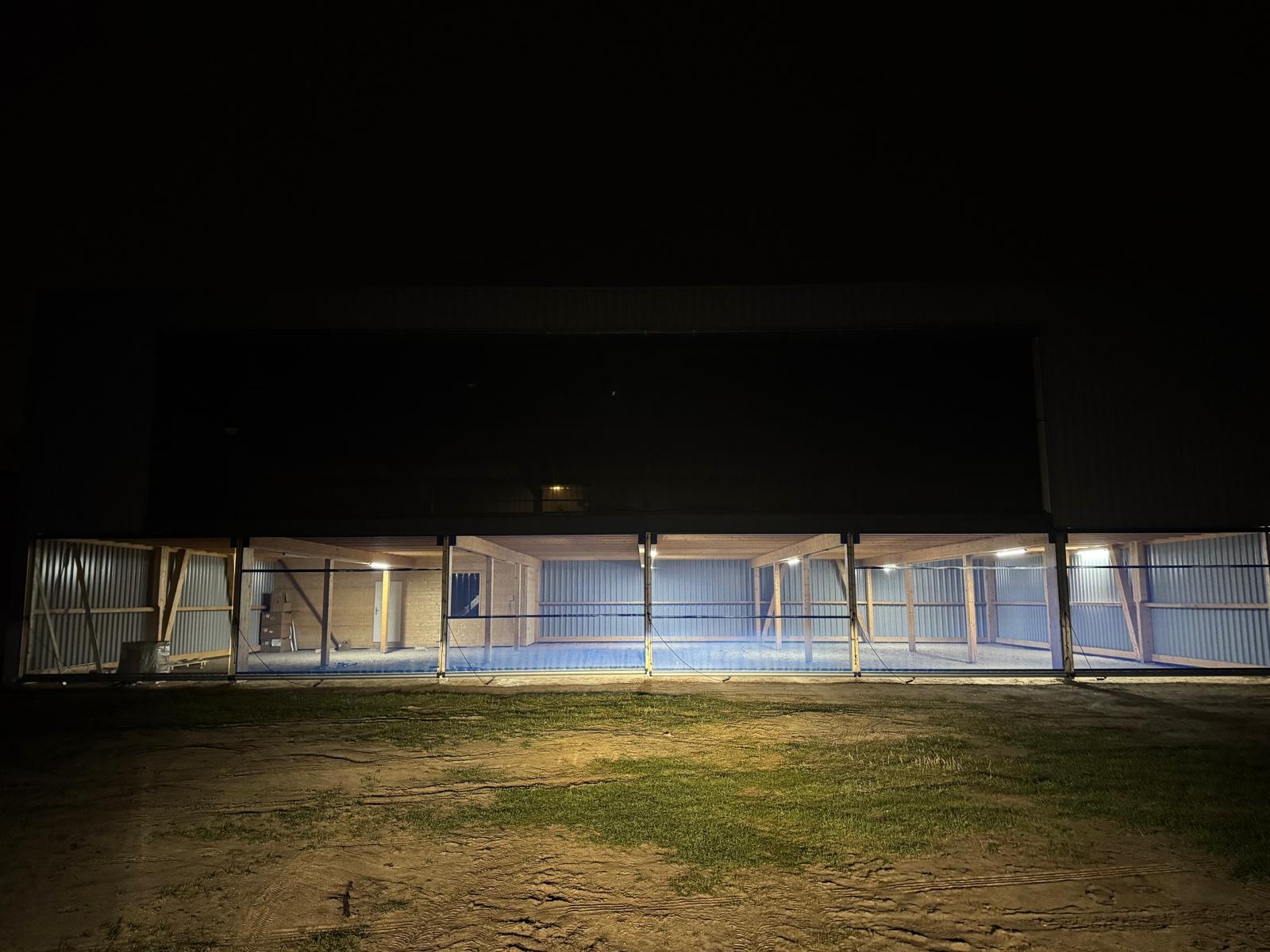
The solar hangar gives the EULE sharing model a suitable home base: central hangarage, on-site charging and infrastructure shared by the fleet.
Aircraft, energy and charging points are brought together at one location.
Three hangar spaces account for the EULE's full wingspan.
The concept is aimed at airfields, clubs and future sharing locations.
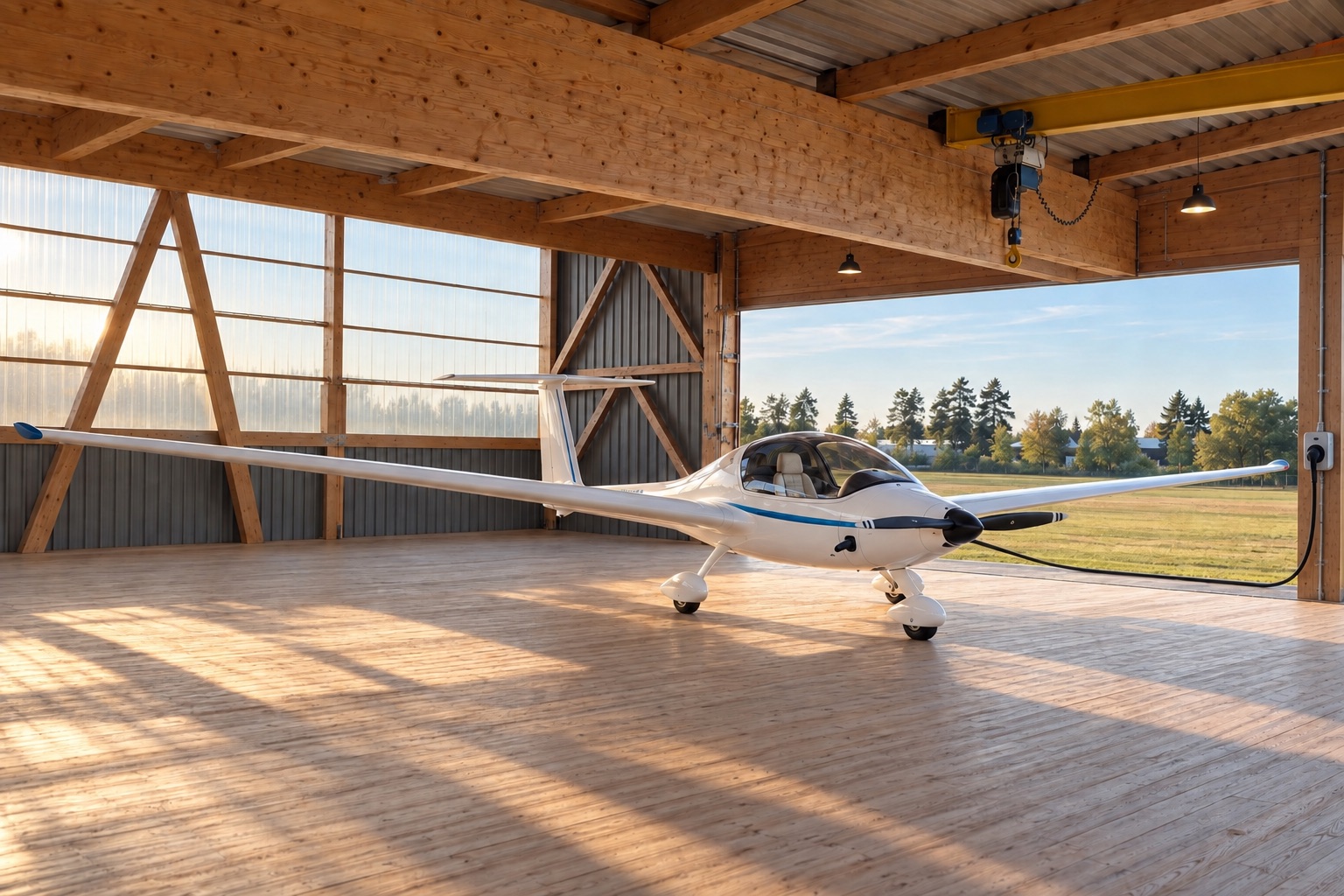
The concept combines a hangar for three motor gliders with 64 kWp of photovoltaics, 80 kWh of battery storage and six Type 2 charging points. The final technical and structural design is planned for each site.
The solar hangar is designed for three motor gliders, each with a 15-metre wingspan. This makes the concept suitable for the full-span Altus-based EULE.
The concept provides six Type 2 charging points with up to 22 kW each and a maximum combined output of 60 kW. At the EDHG reference site, four are on the car side and two on the airfield side.
The current concept is described as an off-grid solar hangar with its own photovoltaics and storage. Whether and how a specific site can operate independently of the grid is part of the site-specific design.
A shared site brings hangarage and charging infrastructure together for several aircraft. This allows a EULE flight-hour subscription or sharing offer to operate from one central home base.
Talk to us about the site, intended use and next steps. Your enquiry is non-binding.